Untacit.

Interactive course

Sketch Your Thinking

Stage 1 · Drop the pressure to draw well and put your thinking on paper

4 sectionsEstimated 45 min
01 / 04

You do not need to know how to draw

This is not an art class. We are not asking whether a drawing looks realistic. We ask one question:

Can another person see what you are thinking?

Important judgement often stays inside your head: what you noticed, what you ignored, what you believe is connected, and where the risk might be. Sketching leaves those choices on paper, where they can be discussed and improved.

Four stages

  1. Start without fear — put a thought on paper
  2. Build a visual language — use shapes, features, people, and movement
  3. Structure a page — use hierarchy, space, containers, and layouts
  4. Explain clearly — use relationships, time, process, metaphor, and story

Write this in the centre of a landscape sheet:

Something I am thinking about is __.

Fill the blank and draw a box around the sentence. You have already started visual thinking.
02 / 04

Sketching is a way to think

Drawing an idea forces useful questions: What matters? What belongs together? What affects what? What is still unclear?

That is the value of sketching. It turns a vague intuition into something you can inspect.

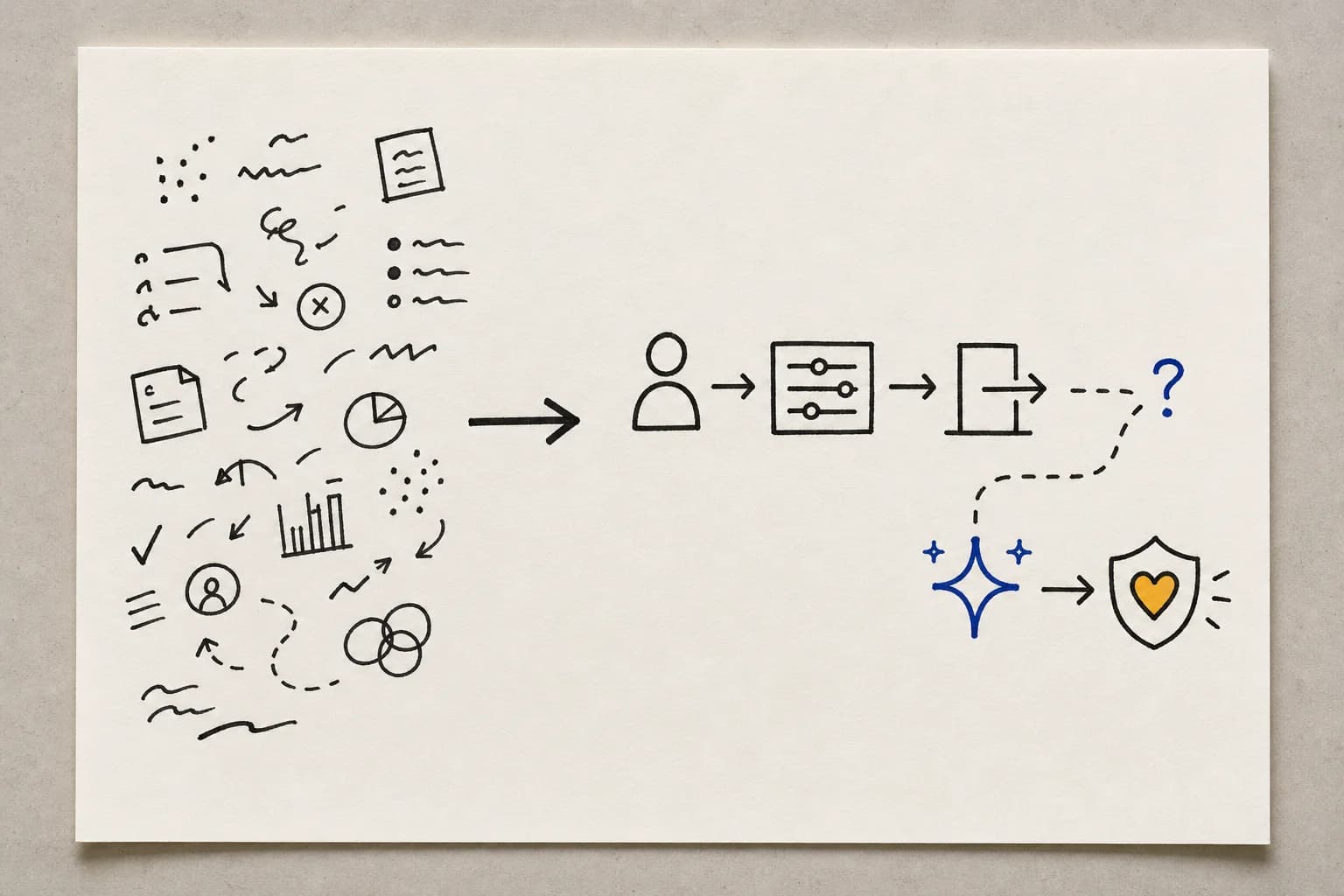
One thinking map develops from keywords into boxes, arrows, symbols, and emphasis
Draw along · 01Write keywords first, then add boxes and relationships. Symbols and colour come last. A sketch is a sequence of thinking moves, not a finished illustration.

Write down one question you have not resolved. Add only three things around it: what you know, what you do not know, and what you need to decide next.

03 / 04

Write first, then draw the box

A blank page feels difficult when you expect the first mark to be a picture. Use a more reliable sequence:

  1. Write the objects, actions, and outcomes
  2. Box each word so it becomes a movable unit
  3. Connect units to make relationships explicit
  4. Remove information that does not change the decision
  5. Draw symbols and emphasis last

Start with this:

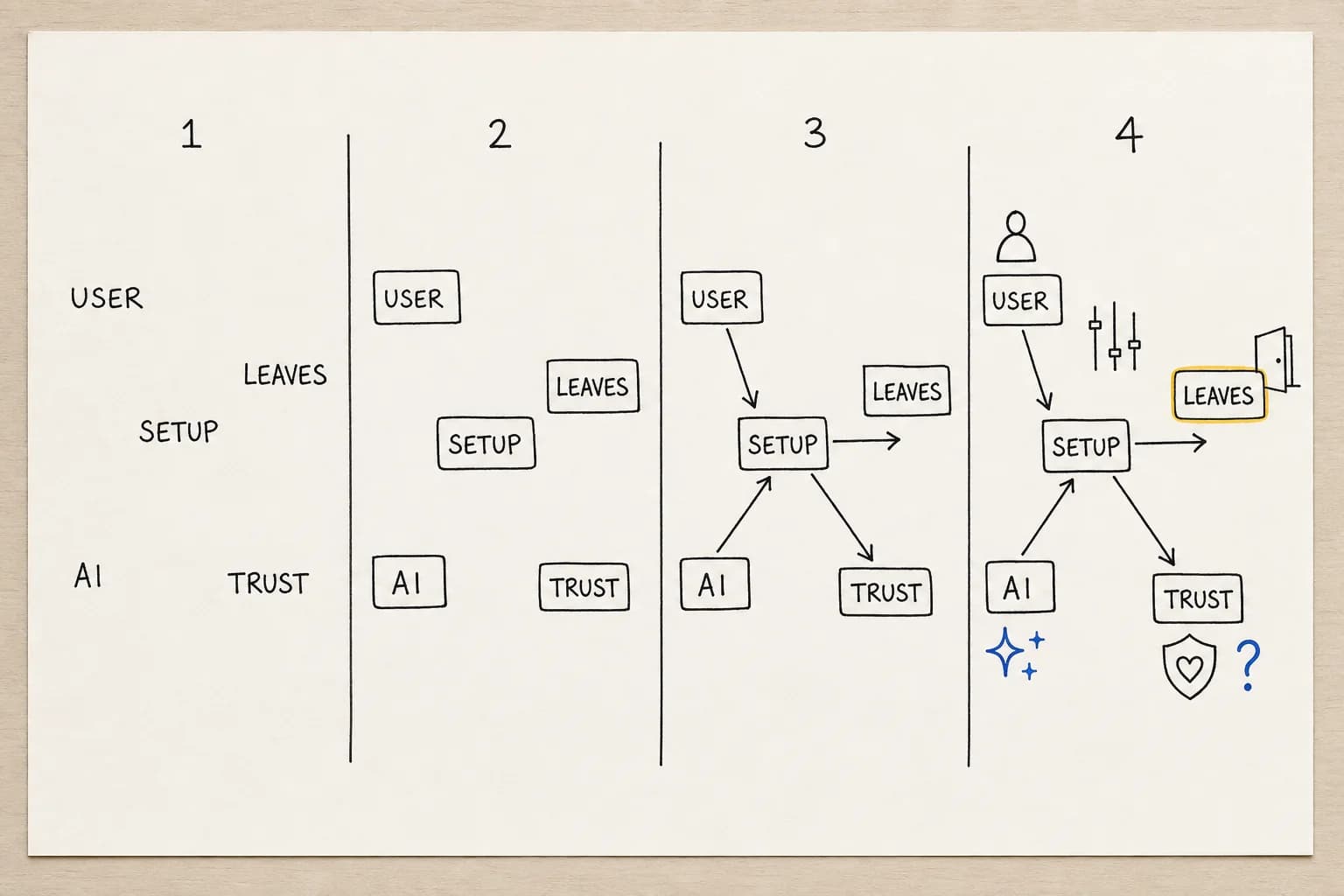
New users often leave during setup. The team wants AI to generate settings, but does not know whether bad suggestions will reduce trust.

Extract six words: user, setup, leaves, AI, suggestion, trust.

Messy information is reduced to the relationship between user setup, leaving, AI suggestions, and trust risk
Example · words to relationshipsKeep only the objects, actions, and unknowns that could change the judgement. The full sentences stay in the source; the structure stays on the page.

Choose one sentence from an email, meeting note, or requirement:

  • circle three nouns
  • underline one verb
  • mark one unknown with a question mark
  • copy them onto paper, box them, and connect them
04 / 04

Finish in ten minutes

Your first page needs one sheet of paper, one black pen, and a real topic. One accent colour is optional.

For the next seven days, choose one tiny topic each day: a plan, a meeting, a decision, or a question. Use the same pen, the same paper, and a five-minute timer.

Next, you will build a visual vocabulary that does not depend on artistic talent.